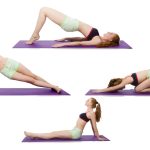
Reverse Crunches are one of the most effective yet underrated abdominal exercises for building core strength and improving stability. Unlike traditional crunches that emphasize the upper abdominal region, Reverse Crunches target the lower abs, which are often the hardest to develop. By lifting your hips off the floor instead of your shoulders, you engage deep stabilizing muscles that enhance balance, posture, and overall athletic performance.
If you’re looking for a way to strengthen your core without straining your neck or back, Reverse Crunches offer a safe and efficient solution. Let’s explore six powerful benefits that make this movement a top choice for athletes, fitness enthusiasts, and beginners alike.
1. Reverse Crunches Strengthen The Lower Abdominal Muscles
The primary focus of Reverse Crunches is the lower portion of the rectus abdominis — the area most people struggle to tone. Traditional crunches tend to neglect these muscles, while Reverse Crunches force them to work harder by initiating the lift from the hips.
As your legs move toward your chest, the contraction starts deep within the lower core, creating a powerful internal tension that sculpts and strengthens your midsection. Over time, this movement can improve muscle definition and endurance, making it a must-have in any ab-focused routine.
Consistent Reverse Crunches not only enhance appearance but also support functional strength used in daily activities, such as lifting objects, climbing stairs, or maintaining posture throughout long workdays.
2. Reverse Crunches Improve Core Stability And Balance
A strong core is essential for more than just aesthetic purposes — it’s the foundation of nearly every athletic movement. Reverse Crunches activate the transverse abdominis, obliques, and hip flexors, all of which contribute to improved balance and coordination.
Because this exercise requires slow, controlled motion, it challenges your core’s ability to stabilize your pelvis and spine. As you lift your hips upward, your stabilizing muscles work to maintain control, preventing momentum from taking over.
The result is greater control during complex movements like squats, lunges, and even upper-body lifts. Reverse Crunches train the deep muscles that keep your spine aligned, making them an excellent choice for athletes seeking long-term joint health and injury prevention.
3. Reverse Crunches Protect The Lower Back
One of the biggest advantages of Reverse Crunches compared to traditional crunches is the reduced strain on the neck and lower back. In standard crunches, improper form can cause tension in the cervical spine and lumbar area. Reverse Crunches, however, keep your upper body relaxed on the floor while the hips lift to generate movement.
This motion minimizes compression on the spine and allows the abs to handle the workload. When performed correctly, Reverse Crunches strengthen the core without aggravating back pain or discomfort.
In fact, studies on core stability exercises show that controlled, pelvic-focused movements can enhance spinal support and relieve lower back pressure — especially when paired with regular stretching and strengthening routines.
4. Reverse Crunches Enhance Athletic Performance
For athletes, Reverse Crunches provide more than aesthetic benefits — they boost functional power and stability. A strong lower core improves your ability to sprint, jump, and change direction quickly. It also enhances balance during rotational movements, such as throwing, swinging, or twisting.
Reverse Crunches train the hip flexors and lower abdominal muscles in unison, improving the coordination between your upper and lower body. This synergy is vital for generating explosive movements in sports like soccer, basketball, and martial arts.
In addition, Reverse Crunches can complement compound lifts like deadlifts and squats by reinforcing pelvic control and core bracing, helping athletes maintain proper form under load.
5. Reverse Crunches Require No Equipment
Another major benefit of Reverse Crunches is their simplicity. You don’t need expensive gym equipment, machines, or even a stability ball to perform them effectively. All you need is a flat surface — ideally a mat or soft floor — and your own body weight.
This makes Reverse Crunches an excellent choice for home workouts, hotel fitness routines, or outdoor training sessions. The exercise is accessible to all fitness levels and can be modified to increase or decrease difficulty.
For example:
-
Beginner variation: Perform Reverse Crunches with bent knees and slower movements.
-
Intermediate variation: Extend your legs fully to add resistance.
-
Advanced variation: Add ankle weights or resistance bands for a greater challenge.
The versatility of Reverse Crunches ensures that anyone, regardless of experience, can safely build a stronger core.
6. Reverse Crunches Burn Fat And Boost Metabolism
Although spot reduction is a myth, strengthening your core through Reverse Crunches contributes to higher overall energy expenditure. This is because engaging multiple muscle groups increases calorie burn during and after the workout.
Reverse Crunches also activate stabilizing muscles that demand oxygen-rich blood flow, elevating your heart rate slightly and promoting improved cardiovascular health.
When combined with proper nutrition and full-body training, Reverse Crunches can help reduce abdominal fat and create a more sculpted midsection. Performing them as part of a circuit — for example, pairing with planks or mountain climbers — maximizes metabolic output for faster results.
How To Perform Reverse Crunches Correctly
Proper form is key to reaping the benefits of Reverse Crunches while avoiding strain. Follow these steps:
-
Lie flat on your back on a mat, with your arms by your sides or under your hips for support.
-
Bend your knees at a 90-degree angle, keeping your feet together.
-
Engage your core by pulling your navel toward your spine.
-
Lift your hips slowly off the floor as you draw your knees toward your chest.
-
Pause briefly at the top of the movement, squeezing your abs.
-
Lower your hips back down under control, without letting your feet touch the ground.
Aim for 3 sets of 12–15 reps, maintaining a slow, steady pace throughout each repetition.
Common Mistakes To Avoid
Even though Reverse Crunches are simple, form errors can reduce their effectiveness or cause discomfort. Watch out for these common mistakes:
-
Using momentum: Swinging your legs too quickly reduces muscle engagement. Focus on control.
-
Lifting too high: Raising your hips excessively shifts strain to the lower back.
-
Holding your breath: Always exhale as you lift your hips and inhale as you lower them.
-
Neck tension: Keep your head and shoulders relaxed to avoid strain.
Maintaining correct posture ensures your abs do the work and prevents injury.
Adding Reverse Crunches To Your Routine
Reverse Crunches can fit into nearly any fitness program. You can perform them at the end of your workout as a finisher or as part of a dedicated core circuit.
Here’s a sample ab circuit to incorporate:
- 15 Reverse Crunches
- 20 Russian Twists
- 30-Second Plank
- 10 Leg Raises
- 20 Bicycle Crunches
Repeat 2–3 rounds with minimal rest between exercises for an efficient core session that boosts endurance and muscle tone.
Reference
American Council on Exercise. “Best Ab Exercises: Reverse Crunch.” https://www.acefitness.org