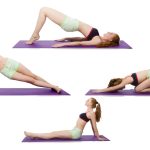
1. Understanding the Core Hold
The core hold is a fundamental isometric exercise designed to build endurance and strength in the abdominal, lower back, and hip muscles. By maintaining a stable position without movement, the body learns to resist external forces, improving overall balance and control. Unlike dynamic movements, the hollow core challenges the deep stabilizers — including the transverse abdominis and multifidus — which protect the spine and enhance posture.
This static exercise forms the foundation for advanced movements like planks, V-sits, and hollow holds. It’s a minimalist yet highly effective method to engage your midsection without needing equipment, making it perfect for both beginners and elite athletes.
2. Why Beginners Should Start With Core Hold
For newcomers, the core hold serves as a low-risk, high-reward introduction to core training. It helps strengthen the muscles necessary for safe lifting, running, and sports performance. Beginners benefit from learning how to brace the core — drawing in the abdomen while breathing steadily — which supports every other physical activity.
Starting with short intervals of 15–20 seconds and gradually increasing duration allows the muscles to adapt without strain. This measured approach ensures proper form and builds a stable foundation for progression into advanced exercises.
3. Perfecting Your Core Hold Form
Form determines effectiveness. Lie flat on your back with arms extended overhead and legs straight. Engage your abs by pressing your lower back into the floor, then lift your shoulders and feet slightly off the ground. Maintain a tight midsection while keeping your breathing controlled.
Avoid arching your lower back — a common mistake that reduces activation of the deep abdominal muscles. Keep your neck neutral and focus on contracting your entire torso as one unit. For standing variations, the same bracing technique applies: stabilize your pelvis, tighten your abs, and maintain alignment.
4. Common Mistakes and How to Fix Them
Several errors can undermine the hollow core:
-
Arching the lower back: Indicates weak core engagement. Fix it by flattening your spine against the ground.
-
Holding your breath: Breathe rhythmically to sustain endurance.
-
Tension in the neck or shoulders: Keep upper body relaxed; focus tension in the core.
-
Overextending duration: Start small and progress slowly to maintain quality.
Recording yourself during training helps identify alignment issues and correct them early.
5. Core Hold Name Variations and Similar Exercises
The core hold is known by several names and variations: hollow hold, static abs hold, isometric abdominal hold, midsection brace, and front hold. Each targets similar muscles but with minor adjustments in positioning and muscle emphasis.
For example, the hollow hold shifts focus toward the lower abs, while the front hold (plank position) challenges shoulders and glutes as stabilizers. These variations ensure balanced development across the entire trunk and prevent training plateaus.
6. Hollow Core Variations to Keep It Fresh
Once the standard core hold feels manageable, experiment with variations:
-
Bent-Knee Core Hold: Easier for beginners; knees at 90 degrees.
-
Weighted Hollow Core: Add a medicine ball for resistance.
-
Dynamic Core Hold: Alternate leg lifts while maintaining bracing.
-
Side Isometric Hold: Engage obliques by turning onto one side.
-
Hollow Rock: Small rocking motion adds instability to increase intensity.
Rotating through these versions challenges different stabilizers and keeps your routine engaging.
7. Benefits Beyond the Main Focus
Beyond strengthening the abs, the core hold offers full-body advantages:
-
Improved posture: Strengthening spinal stabilizers supports upright alignment.
-
Reduced injury risk: Enhances control during lifting or twisting motions.
-
Enhanced athletic performance: Supports agility, balance, and power transfer.
-
Increased muscular endurance: Builds resistance against fatigue during sustained activity.
These benefits extend beyond aesthetics, contributing to long-term functional health and resilience.
8. How to Incorporate Core Hold Into Your Routine
You can integrate the core hold into almost any fitness program. Try performing it as part of your warm-up to activate the midsection or include it in your finisher routine for endurance.
Example schedule:
-
Day 1: Core Hold – 3 sets of 20 seconds
-
Day 3: Side Core Hold – 3 sets of 30 seconds
-
Day 5: Weighted Core Hold – 3 sets of 40 seconds
Pairing it with compound lifts like squats or deadlifts enhances stabilization under load.
9. The Science Behind the Core Hold
Research shows that isometric core exercises like the core hold activate deep stabilizing muscles more effectively than traditional crunches. According to a 2022 Journal of Strength and Conditioning Research study, static core training improves trunk stiffness and reduces spinal load, promoting injury prevention and better athletic mechanics.
The combination of static tension and controlled breathing also improves neuromuscular coordination — a vital element in both daily movement and competitive sports.
10. Tracking Your Progress
To monitor improvement, track your core hold duration, quality of form, and breathing control. Begin with 15 seconds and aim for 60–90 seconds over time. Use a timer app or fitness tracker to record consistency.
You can also perform periodic stability tests, such as balancing on one leg or performing dynamic movements after holding your core tight. These practical measures reveal how much your stability and coordination have improved.
11. Staying Motivated and Consistent
Maintaining motivation with the core hold comes from measurable progress. Notice how your posture improves, movements feel lighter, and your confidence increases. Combine it with complementary core activities like Pilates or yoga for variety.
Small daily efforts lead to visible results — stay consistent, and your midsection strength will transform over time.
Reference
-
Journal of Strength and Conditioning Research, 2022. Effects of Isometric Core Training on Trunk Stability and Performance.
https://journals.lww.com/nsca-jscr
.